4 sourcesFirst reported today at 10:30, updated 3 h ago
Zahed: BNP won’t back extrajudicial killings
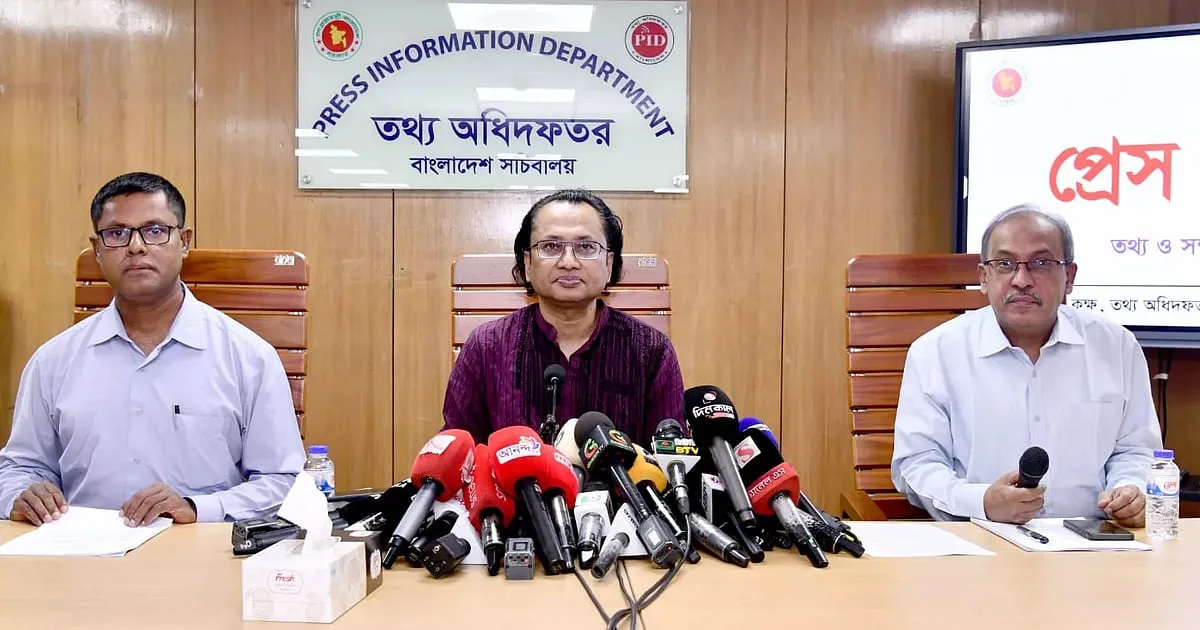
Photo: The Daily Waadaa
Neutral summary
Prime Minister's Information and Broadcasting Adviser Zahed Ur Rahman said on Tuesday that the BNP fought enforced disappearances and extrajudicial killings for 17 years and will not backtrack on that position in government. He said no democratic government can support extrajudicial killings and that suspects must be arrested and tried. He said the Prime Minister will decide on Inspector General of Police Md Ali Hossain Fakir after returning from Japan, after the IGP's crossfire remarks, which Zahed said the IGP later retreated from. Zahed also commented on the arrest of a woman in Bhaluka, Mymensingh, for a Facebook live remark about voting for the BNP, saying the matter now lies with the judiciary. On the vandalism and looting of three Hindu families' homes in Pirganj, Rangpur, he said police had been deployed and action taken, and that the government would act against such crimes.
 United News of Bangladesh (UNB)
 The Daily Waadaa
Written by AI from these outlets' articles: facts they report, claims attributed, numbers checked against the sources. It may still contain errors; read the originals.
Article analysis
United News of Bangladesh (UNB)Neutral
This article has not been scored yet.
Each story's lead article is scored automatically. Members can have any other outlet's article scored on request, for €9 a month.
Become a memberThe same event, one framing
The earliest headline of each kind. Marked words are judgements in the headline itself: stated as fact or in quotation marks.
Neutral 4 of 4
Zahed: BNP won’t back extrajudicial killings
 Dhaka Tribune
Every headline, in order
-
Dhaka Tribune
Bangladesh
First to report
Neutral
-
The Daily Waadaa
Bangladesh
Neutral
-
United News of Bangladesh (UNB)
Bangladesh
Selected above
Neutral
-
 Bangladesh Post
Bangladesh
Neutral
About this method
Method. Bias types follow the Table of Media Bias Elements and the Media Bias Taxonomy (both CC BY 4.0). The impartiality rules follow the BBC Editorial Guidelines and the Ofcom Broadcasting Code. The score is calculated from the seven answers, never generated.
What this is not. No outlet gets a standing bias rating, and there is no left/right axis, because that axis does not describe Bangladeshi politics. Each analysis covers one article about one event. Members' analytics count how each outlet's headlines were labelled over a chosen period, with the number of headlines behind every share, and also show the average score of an outlet's scored articles: that average describes those articles (mostly each story's lead), not the outlet, and outlets are never ranked by it or by any share.
Known limits. Headlines are grouped into stories automatically, so an unrelated headline sometimes slips in; it is shown faded rather than hidden. Where outlets carry the same wire copy, the comparison has little to show. Human annotators agree on bias in Bangla news only moderately (κ = 0.574 at best), which limits what any automated score can claim.