3 sourcesFirst reported yesterday at 22:27, updated 3 h ago
Carney says US moving closer to Canada’s trade demands as midterms approach
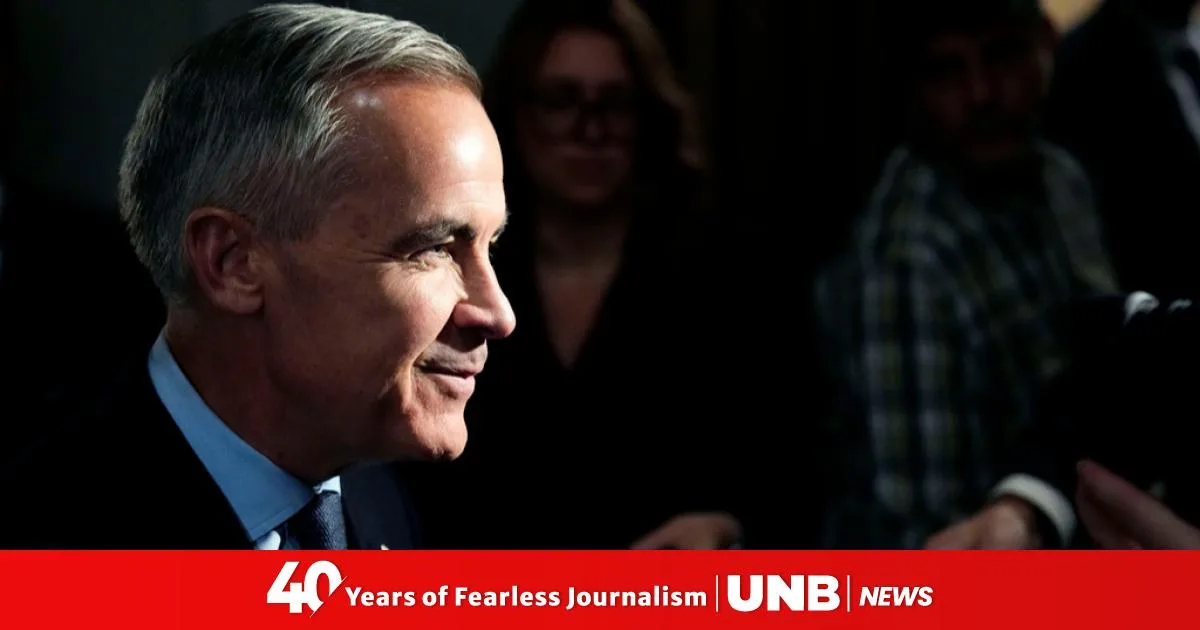
Photo: United News of Bangladesh (UNB)
Neutral summary
Canadian Prime Minister Mark Carney said Monday that trade talks with the Trump administration had intensified slightly, and that any progress reflects Washington moving closer to Canada's position; Canada's negotiating position has not changed, Carney said. Carney said he did not know whether Trump would sign a new deal, and the Canadian trade minister's office said Canada remains in constructive dialogue with Washington. White House economic adviser Kevin Hassett suggested the countries were nearing a deal, eight days before US midterm elections. Canada rejected US terms in August, which Carney said crossed its red lines; Trump then imposed 50% tariffs on about $20 billion of Canadian goods. On Friday Trump said he would lift some 50% tariffs while adding new ones on other products, and said Canada was willing to give the US anything and a deal could come soon. Tariffs have become a campaign issue in Senate races in Michigan and Maine. Carney is to host EU leaders in Montreal on Thursday and Friday.
 United News of Bangladesh (UNB)
 The Hindu
Written by AI from these outlets' articles: facts they report, claims attributed, numbers checked against the sources. It may still contain errors; read the originals.
Article analysis
Band BLocalised faults
United News of Bangladesh (UNB)Neutral
Headline attributes Carney's claim; narration is largely descriptive, includes US voices, with one evaluative 'threatening' and an unattributed rebuttal of Trump's deficit framing.
Three of the three outlets that covered this event headlined it neutrally.
The faults are local; the reporter's narration stays descriptive.
1 Straight reporting10 Campaigning
The same event, one framing
The earliest headline of each kind. Marked words are judgements in the headline itself: stated as fact or in quotation marks.
Neutral 3 of 3
Carney says Trump moving closer to Canada’s trade demands as midterms loom
 Associated Press
How the 3 was worked out
The model answers seven fixed questions from 0 to 3 and cites evidence for each. The score is calculated from the answers in code, so any disagreement points to one question.
-
G1
Reporter's own voiceOne isolated evaluative word in the reporter's voice. Evidence 11
-
G2
HeadlineReports the event or the speech act; contested claims are attributed.0
-
G3
Other side missingEvery party involved responds substantively.0
-
G4
Weight of the unanswered allegationNo allegation against an identifiable party.0
-
G5
Loaded quotesQuotes are informational.0
-
G6
Unattributed claimsOne or two disputable claims are unattributed. Evidence 21
-
G7
Missing contextNecessary background is present.0
Evidence
1Word choiceReporter voice
threatening an industry that has been deeply integrated
Characterises Trump's persuasion effort as a threat in the paper's own voice.
2OpinionatedReporter voice
although energy trade more than accounts for the gap
Reporter rebuts Trump's deficit criticism without attribution, though it is a checkable factual context.
3CoverageReporter voice· not scored
Kevin Hassett suggested that the two countries were nearing a trade deal
US side is represented through Hassett and Trump quotes, so coverage is reasonably balanced.
Show the calculation
S = G2 + … + G7 = 0 + 0 + 0 + 0 + 1 + 0 = 1
G1 = 1, below 2: not band D
Not band C or A: band B
Band B: S ≤ 3 gives 3, 4 to 6 gives 4, 7 or more gives 5. Score 3
Every headline, in order
-
Associated Press
US & Canada
First to report
Neutral
Carney says Trump moving closer to Canada’s trade demands as midterms loom
-
United News of Bangladesh (UNB)
Bangladesh
Analysed above
Neutral
Carney says US moving closer to Canada’s trade demands as midterms approach
About this method
Method. Bias types follow the Table of Media Bias Elements and the Media Bias Taxonomy (both CC BY 4.0). The impartiality rules follow the BBC Editorial Guidelines and the Ofcom Broadcasting Code. This analysis was made by claude-opus-5-5 on rubric 1.0.0. The score is calculated from the seven answers, never generated.
What this is not. No outlet gets a standing bias rating, and there is no left/right axis, because that axis does not describe Bangladeshi politics. Each analysis covers one article about one event. Members' analytics count how each outlet's headlines were labelled over a chosen period, with the number of headlines behind every share, and also show the average score of an outlet's scored articles: that average describes those articles (mostly each story's lead), not the outlet, and outlets are never ranked by it or by any share.
Known limits. Headlines are grouped into stories automatically, so an unrelated headline sometimes slips in; it is shown faded rather than hidden. Where outlets carry the same wire copy, the comparison has little to show. Human annotators agree on bias in Bangla news only moderately (κ = 0.574 at best), which limits what any automated score can claim.