8 sourcesFirst reported yesterday at 14:50, updated 14 h ago
ইরানের অর্থায়নে নতুন আঞ্চলিক যুদ্ধের প্রস্তুতি নিচ্ছে হিজবুল্লাহ, সূত্রের দাবি
hezbollah prepares new regional war funded by iran, sources claim
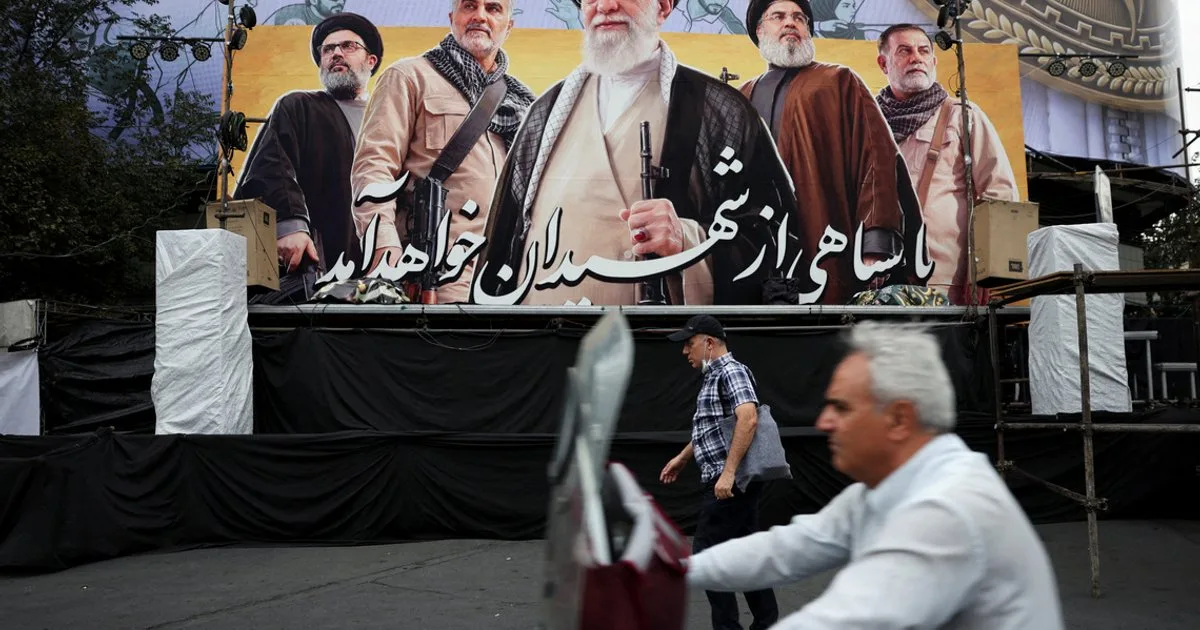
Photo: The Straits Times
Neutral summary
Lebanese armed group Hezbollah has spent three months preparing for possible renewed hostilities with Israel, according to Lebanese security sources cited by Reuters. The sources said the group received tens of millions of dollars from Iran for military capabilities, in addition to around $200 million for displaced families; the group's media office did not dispute the reported attention to rearmament but rejected claims its command-and-control had collapsed. Sources said Hezbollah is focusing on explosives and drones, and is restoring command structures after losses at Bint Jbeil and the Ali al-Taher ridge. Israel's military declined to comment, Iran's UN mission did not immediately respond, and a US State Department spokesman said Washington would keep pressuring Hezbollah's finances, while a Treasury spokesperson said Iran was running out of money. Hezbollah has not said whether it would join any new fighting and says it wants to avoid giving Israel a pretext to escalate, fearing displacement of its constituents.
Where accounts differ. Ajker Patrika and Desh TV, citing Reuters, report that Hezbollah rejected claims its command-and-control had broken down, which The Straits Times does not mention; the outlets otherwise agree on the reported figures.
 The Straits Times
 Ajker Patrika
 Desh TV
Written by AI from these outlets' articles: facts they report, claims attributed, numbers checked against the sources. It may still contain errors; read the originals.
Article analysis


Band BLocalised faults
The Straits TimesNeutral
Attributes rearmament claims to anonymous security sources in headline and body, includes Hezbollah's response and context, with a slightly intensified 'regional war' headline framing.
Eight of the eight outlets that covered this event headlined it neutrally.
The faults are local; the reporter's narration stays descriptive.
1 Straight reporting10 Campaigning
The same event, one framing
The earliest headline of each kind. Marked words are judgements in the headline itself: stated as fact or in quotation marks.
Neutral 8 of 8
Hezbollah readies for new regional war with funds from Iran, sources say
The Straits Times
How the 3 was worked out
The model answers seven fixed questions from 0 to 3 and cites evidence for each. The score is calculated from the answers in code, so any disagreement points to one question.
-
G1
Reporter's own voiceNarration is descriptive throughout.0
-
G2
HeadlineCompresses or intensifies, but the claim stays attributed. Evidence 11
-
G3
Other side missingEvery party involved responds substantively.0
-
G4
Weight of the unanswered allegationNo allegation against an identifiable party.0
-
G5
Loaded quotesQuotes are informational.0
-
G6
Unattributed claimsOne or two disputable claims are unattributed. Evidence 31
-
G7
Missing contextNecessary background is present.0
Evidence
1Headline-body attribution mismatchHeadline voice
Hezbollah readies for new regional war with funds from Iran
Headline compresses source claims into 'new regional war' framing but retains 'sources say' attribution.
2Source selectionReporter voice· not scored
according to Lebanese security personnel briefed on its activities
Core claims rest on anonymous security sources, though multiple and Hezbollah response included.
3Unsubstantiated claimReporter voice
It nevertheless remains committed to fighting Israel
Characterization of the group's commitment stated in reporter voice before attribution clause.
4Word choiceAttributed quote voice· not scored
keep strangling Hezbollah's finances
Charged verb from a US spokesman, reported as paraphrase.
Show the calculation
S = G2 + … + G7 = 1 + 0 + 0 + 0 + 1 + 0 = 2
G1 = 0, below 2: not band D
Not band C or A: band B
Band B: S ≤ 3 gives 3, 4 to 6 gives 4, 7 or more gives 5. Score 3
Every headline, in order
-
The Straits Times
Asia Pacific
Analysed above
Neutral
Hezbollah readies for new regional war with funds from Iran, sources say
-
Arab News Middle East Neutral
Hezbollah readies for new regional war with funds from Iran, sources say
-
 The New Arab
Middle East
Neutral
Hezbollah readies for new regional war with funds from Iran, sources say
-
Desh TV
Bangladesh
Neutral
ইরানের অর্থায়নে নতুন আঞ্চলিক যুদ্ধের প্রস্তুতি নিচ্ছে হিজবুল্লাহ
About this method
Method. Bias types follow the Table of Media Bias Elements and the Media Bias Taxonomy (both CC BY 4.0). The impartiality rules follow the BBC Editorial Guidelines and the Ofcom Broadcasting Code. This analysis was made by claude-opus-5-5 on rubric 1.0.0. The score is calculated from the seven answers, never generated.
What this is not. No outlet gets a standing bias rating, and there is no left/right axis, because that axis does not describe Bangladeshi politics. Each analysis covers one article about one event. Members' analytics count how each outlet's headlines were labelled over a chosen period, with the number of headlines behind every share, and also show the average score of an outlet's scored articles: that average describes those articles (mostly each story's lead), not the outlet, and outlets are never ranked by it or by any share.
Known limits. Headlines are grouped into stories automatically, so an unrelated headline sometimes slips in; it is shown faded rather than hidden. Where outlets carry the same wire copy, the comparison has little to show. Human annotators agree on bias in Bangla news only moderately (κ = 0.574 at best), which limits what any automated score can claim.