4 sourcesFirst reported yesterday at 08:16, updated 4 h ago
In China, the AI bubble has already burst
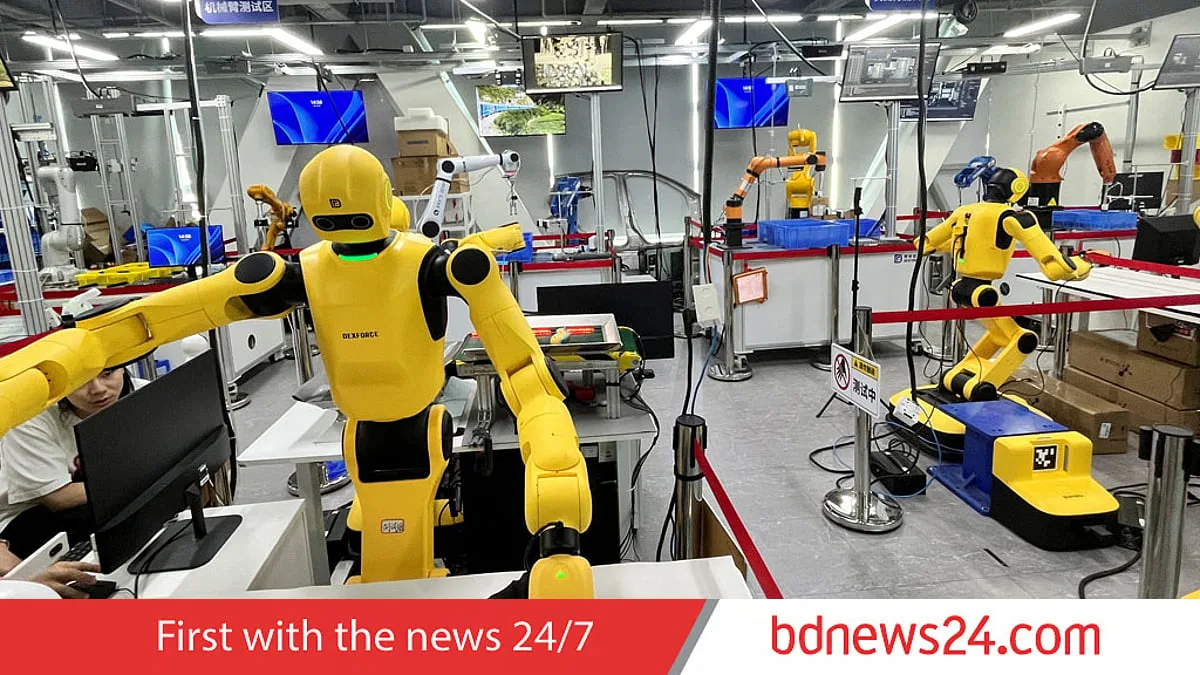
Photo: bdnews24.com
Neutral summary
China's mainland STAR50 index of AI and semiconductor leaders has fallen 40 percent in less than four months, wiping out about $480 billion in market value, according to Reuters-sourced reports. The slump has halted a two-year rally that began with economic stimulus promises and stalled Beijing's push for a "slow bull" market. Traders cited high valuations, tax bills and the threat of US or other countries banning Chinese equipment in data centres, though there was no clear trigger. Goldman Sachs data show AI stocks make up 42 percent of China's market capitalisation. Fund manager Dong Baozhen said "now we see the bubble bursting," while Hong Hao of Lotus Asset Management said the selloff would halt many listings. The China Securities Regulatory Commission did not immediately respond to questions. Some investors see value in the selloff, while others, such as fund manager Wang Zhuo, expect a price war.
Where accounts differ. The Kathmandu Post names the broad blue-chip index as the CSI 300, while bdnews24.com and The Financial Express refer only to China's broad blue-chip index, so the naming is not fully consistent across outlets.
 The Kathmandu Post
 The Financial Express
 bdnews24.com
Written by AI from these outlets' articles: facts they report, claims attributed, numbers checked against the sources. It may still contain errors; read the originals.
Article analysis
Band BLocalised faults
The Kathmandu PostStated as fact
Headline adopts the 'bubble burst' framing voiced by quoted fund managers; narration is largely data-driven with mild evaluative wording and includes contrary investor views and a regulator non-response.
Zero of the four outlets that covered this event headlined it neutrally.
The faults are local; the reporter's narration stays descriptive.
1 Straight reporting10 Campaigning
The same event, one framing
The earliest headline of each kind. Marked words are judgements in the headline itself: stated as fact or in quotation marks.
Stated as fact 4 of 4
In China, the AI bubble has already burst
 The Express Tribune
How the 3 was worked out
The model answers seven fixed questions from 0 to 3 and cites evidence for each. The score is calculated from the answers in code, so any disagreement points to one question.
- G1 1
-
G2
HeadlineCompresses or intensifies, but the claim stays attributed. Evidence 11
-
G3
Other side missingEvery party involved responds substantively.0
-
G4
Weight of the unanswered allegationNo allegation against an identifiable party.0
-
G5
Loaded quotesSome evaluative words in quotes, in proportion to the event. Evidence 41
-
G6
Unattributed claimsOne or two disputable claims are unattributed. Evidence 51
-
G7
Missing contextNecessary background is present.0
Evidence
1Headline-body attribution mismatchHeadline voice
In China, the AI bubble has already burst
Headline asserts in the paper's voice the 'bubble burst' characterization that the body attributes to fund managers, though the 40% fall supports a crash framing.
2Word choiceReporter voice
lofty valuations collapse
Evaluative 'lofty' and dramatic 'collapse' in narration, though backed by cited multiples.
3Word choiceReporter voice
The market frenzy
'Frenzy' is an evaluative characterization in the reporter's voice.
4Word choiceAttributed quote voice
speculative crazy bull
Charged language from a quoted fund manager, proportionate market commentary.
5Unsubstantiated claimReporter voice
has pushed many investors towards defensive assets
Claim about investor behaviour stated without a source.
Show the calculation
S = G2 + … + G7 = 1 + 0 + 0 + 1 + 1 + 0 = 3
G1 = 1, below 2: not band D
Not band C or A: band B
Band B: S ≤ 3 gives 3, 4 to 6 gives 4, 7 or more gives 5. Score 3
Every headline, in order
-
The Express Tribune
South Asia
First to report
Stated as fact
-
The Kathmandu Post
South Asia
Analysed above
Stated as fact
-
bdnews24.com
Bangladesh
Stated as fact
-
The Financial Express
Bangladesh
Stated as fact
About this method
Method. Bias types follow the Table of Media Bias Elements and the Media Bias Taxonomy (both CC BY 4.0). The impartiality rules follow the BBC Editorial Guidelines and the Ofcom Broadcasting Code. This analysis was made by claude-opus-5-5 on rubric 1.0.0. The score is calculated from the seven answers, never generated.
What this is not. No outlet gets a standing bias rating, and there is no left/right axis, because that axis does not describe Bangladeshi politics. Each analysis covers one article about one event. Members' analytics count how each outlet's headlines were labelled over a chosen period, with the number of headlines behind every share, and also show the average score of an outlet's scored articles: that average describes those articles (mostly each story's lead), not the outlet, and outlets are never ranked by it or by any share.
Known limits. Headlines are grouped into stories automatically, so an unrelated headline sometimes slips in; it is shown faded rather than hidden. Where outlets carry the same wire copy, the comparison has little to show. Human annotators agree on bias in Bangla news only moderately (κ = 0.574 at best), which limits what any automated score can claim.