3 sourcesFirst reported yesterday at 13:12, updated 13 h ago
Constitutional Amendment: Ondo Assembly passes state police bill
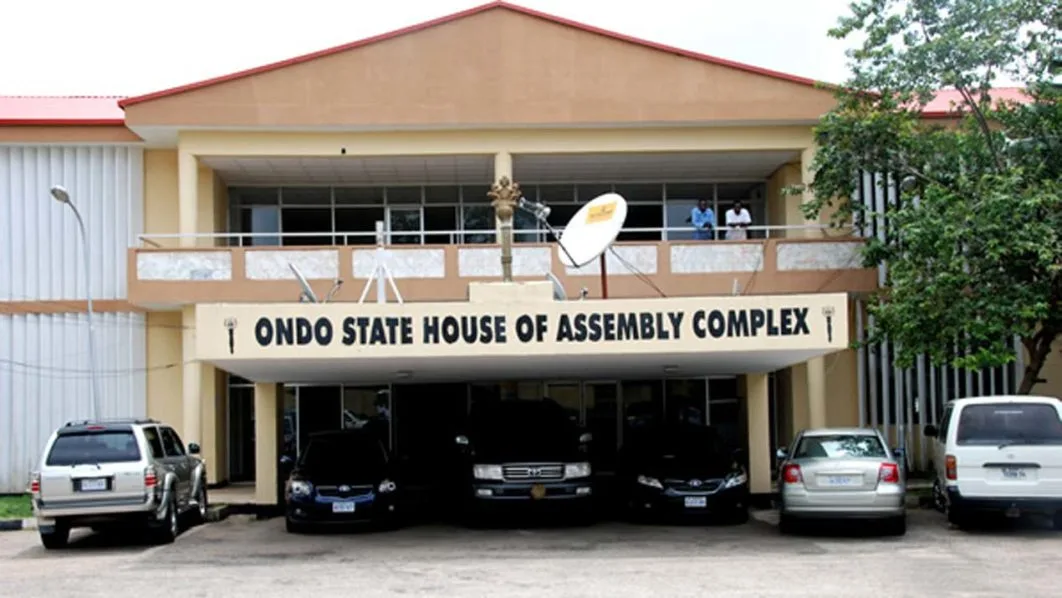
Photo: Premium Times
Article analysis
Band AStraight reporting
 Premium TimesNeutral
Factually reports the Assembly's vote in its headline and narration, attributing benefits to legislators, though it omits any mention of known concerns about state policing.
Three of the three outlets that covered this event headlined it neutrally.
Nothing in the headline, sourcing or narration pushes the reader.
1 Straight reporting10 Campaigning
The same event, one framing
The earliest headline of each kind. Marked words are judgements in the headline itself: stated as fact or in quotation marks.
Neutral 3 of 3
Ondo Assembly passes bill for establishment of state police
 Vanguard
How the 2 was worked out
The model answers seven fixed questions from 0 to 3 and cites evidence for each. The score is calculated from the answers in code, so any disagreement points to one question.
-
G1
Reporter's own voiceNarration is descriptive throughout.0
-
G2
HeadlineReports the event or the speech act; contested claims are attributed.0
-
G3
Other side missingEvery party involved responds substantively.0
-
G4
Weight of the unanswered allegationNo allegation against an identifiable party.0
-
G5
Loaded quotesQuotes are informational.0
-
G6
Unattributed claimsEvery disputable claim is attributed.0
-
G7
Missing contextMinor context is missing. Evidence 11
Evidence
1Cherry pickingReporter voice
state policing system is expected to improve security operations
Only proponents' expected benefits are reported; no mention of common concerns about state police such as abuse by governors.
2Selection (unscored)Reporter voice· not scored
Ondo Assembly passes state police bill
Routine legislative story choice; corpus-level property only.
Show the calculation
S = G2 + … + G7 = 0 + 0 + 0 + 0 + 0 + 1 = 1
G1 = 0, below 2: not band D
G1 = 0 and S ≤ 1: band A
Band A: S = 0 gives 1, S = 1 gives 2. Score 2
Every headline, in order
-
Vanguard
Africa
First to report
Neutral
-
 The Punch
Africa
Neutral
-
Premium Times
Africa
Analysed above
Neutral
Constitutional Amendment: Ondo Assembly passes state police bill
About this method
Method. Bias types follow the Table of Media Bias Elements and the Media Bias Taxonomy (both CC BY 4.0). The impartiality rules follow the BBC Editorial Guidelines and the Ofcom Broadcasting Code. This analysis was made by claude-opus-5-5 on rubric 1.0.0. The score is calculated from the seven answers, never generated.
What this is not. No outlet gets a standing bias rating, and there is no left/right axis, because that axis does not describe Bangladeshi politics. Each analysis covers one article about one event. Members' analytics count how each outlet's headlines were labelled over a chosen period, with the number of headlines behind every share, and also show the average score of an outlet's scored articles: that average describes those articles (mostly each story's lead), not the outlet, and outlets are never ranked by it or by any share.
Known limits. Headlines are grouped into stories automatically, so an unrelated headline sometimes slips in; it is shown faded rather than hidden. Where outlets carry the same wire copy, the comparison has little to show. Human annotators agree on bias in Bangla news only moderately (κ = 0.574 at best), which limits what any automated score can claim.