3 sourcesFirst reported yesterday at 00:01, updated 18 h ago
Attackers kill nurse, severely injure health worker responding to Ebola case in eastern Congo
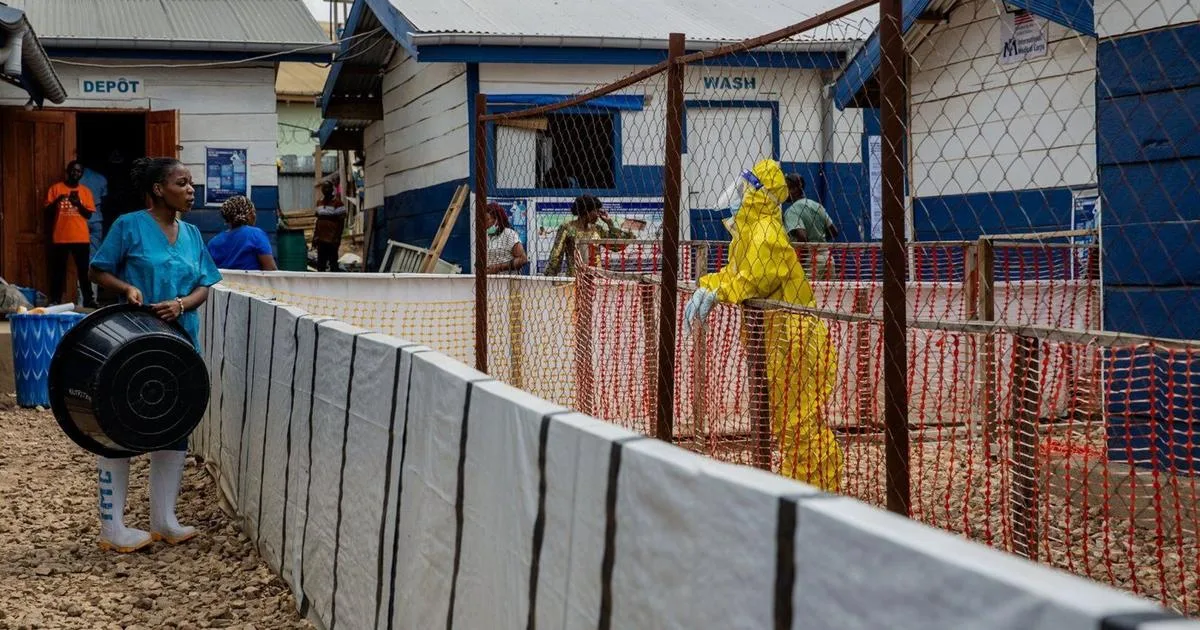
Photo: Toronto Star
Neutral summary
A nurse was killed and a health worker severely injured in an attack while responding to an Ebola alert in the town of Bafwasende, Tshopo province, eastern Congo, on Saturday, according to the World Health Organization. WHO Director General Tedros Adhanom Ghebreyesus said on X on Sunday that healthcare must always be protected, and WHO Africa regional director Dr. Mohamed Yakub Janabi said misinformation and fear must never fuel violence. Local authorities had not yet commented on the attack or the suspects. Congo's health ministry reported more than 9,800 cases and more than 4,700 deaths since the outbreak began in May. Responders said skepticism about the disease among communities, including a belief that Ebola is a hoax, has complicated their work, and a Congolese politician was beaten to death in North Kivu last month after defending the government's response.
Where accounts differ. Africanews adds that responders have previously said some response team members were held captive and burial teams were threatened, a detail that appears only in that outlet.
 Toronto Star
 Africanews
Written by AI from these outlets' articles: facts they report, claims attributed, numbers checked against the sources. It may still contain errors; read the originals.
Article analysis
Band BLocalised faults
Toronto StarNeutral
Reports the attack factually with WHO attribution in headline and body, but asserts in its own voice, without a source, that distrust of the government stems from corruption.
Three of the three outlets that covered this event headlined it neutrally.
The faults are local; the reporter's narration stays descriptive.
1 Straight reporting10 Campaigning
The same event, one framing
The earliest headline of each kind. Marked words are judgements in the headline itself: stated as fact or in quotation marks.
Neutral 3 of 3
Attackers kill nurse, severely injure health worker responding to Ebola case in eastern Congo
 Associated Press
How the 3 was worked out
The model answers seven fixed questions from 0 to 3 and cites evidence for each. The score is calculated from the answers in code, so any disagreement points to one question.
-
G1
Reporter's own voiceOne isolated evaluative word in the reporter's voice. Evidence 11
-
G2
HeadlineReports the event or the speech act; contested claims are attributed.0
-
G3
Other side missingEvery party involved responds substantively.0
-
G4
Weight of the unanswered allegationNo allegation against an identifiable party.0
-
G5
Loaded quotesQuotes are informational.0
- G6 1
-
G7
Missing contextNecessary background is present.0
Evidence
1Unsubstantiated claimReporter voice
There is widespread distrust of the country’s government because of how it has managed past Ebola outbreaks as well as chronic corruption.
A causal, evaluative claim about the government (including 'chronic corruption') is stated as fact without attribution.
2MagnitudeReporter voice
widespread distrust
Unquantified scale word with no source.
Show the calculation
S = G2 + … + G7 = 0 + 0 + 0 + 0 + 1 + 0 = 1
G1 = 1, below 2: not band D
Not band C or A: band B
Band B: S ≤ 3 gives 3, 4 to 6 gives 4, 7 or more gives 5. Score 3
Every headline, in order
-
Associated Press
US & Canada
First to report
Neutral
Attackers kill nurse, severely injure health worker responding to Ebola case in eastern Congo
-
Toronto Star
US & Canada
Analysed above
Neutral
Attackers kill nurse, severely injure health worker responding to Ebola case in eastern Congo
About this method
Method. Bias types follow the Table of Media Bias Elements and the Media Bias Taxonomy (both CC BY 4.0). The impartiality rules follow the BBC Editorial Guidelines and the Ofcom Broadcasting Code. This analysis was made by claude-opus-5-5 on rubric 1.0.0. The score is calculated from the seven answers, never generated.
What this is not. No outlet gets a standing bias rating, and there is no left/right axis, because that axis does not describe Bangladeshi politics. Each analysis covers one article about one event. Members' analytics count how each outlet's headlines were labelled over a chosen period, with the number of headlines behind every share, and also show the average score of an outlet's scored articles: that average describes those articles (mostly each story's lead), not the outlet, and outlets are never ranked by it or by any share.
Known limits. Headlines are grouped into stories automatically, so an unrelated headline sometimes slips in; it is shown faded rather than hidden. Where outlets carry the same wire copy, the comparison has little to show. Human annotators agree on bias in Bangla news only moderately (κ = 0.574 at best), which limits what any automated score can claim.