25 sourcesFirst reported yesterday at 00:22, updated 8 h ago
Lula wins historic 4th term in dramatic comeback
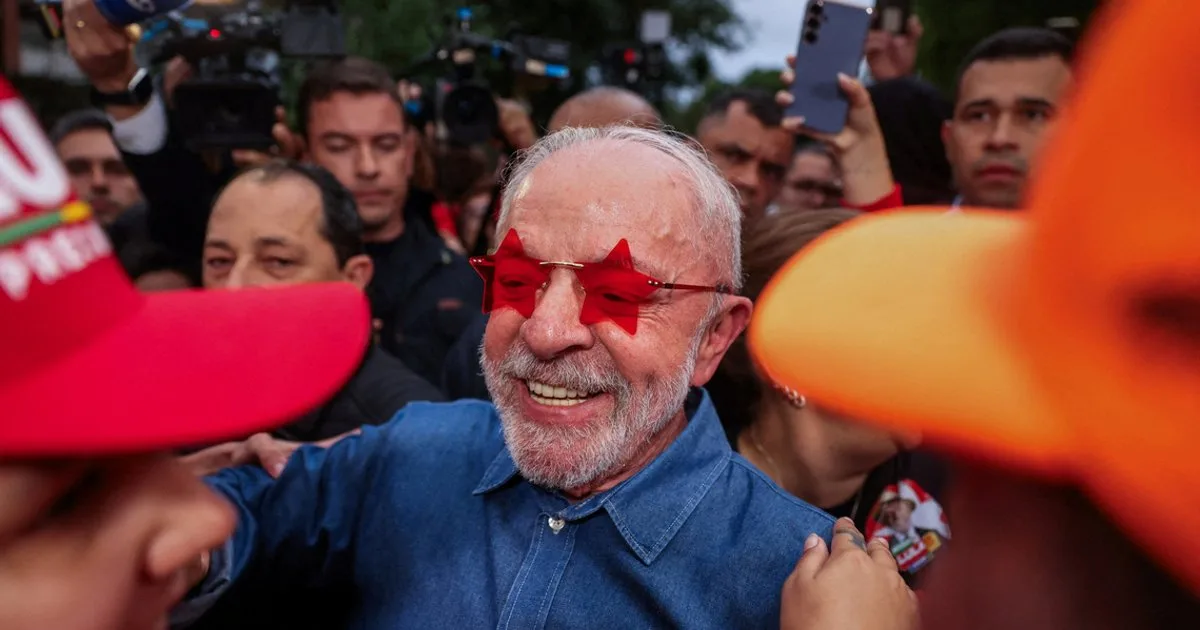
Photo: The Straits Times
Neutral summary
Brazilian President Luiz Inacio Lula da Silva won a fourth term in the country's presidential election, according to the electoral court, after trailing Senator Flavio Bolsonaro in the first round. Reports put his share of the runoff vote at over 51 percent and Bolsonaro's at about 48 percent, with turnout higher than expected, according to pollsters. Lula's supporters celebrated, and Workers' Party leader Edinho Silva called it a historic turning point for democracy. Lula campaigned on falling poverty and inequality and warned that Bolsonaro would cut welfare spending and weaken Brazil's sovereignty to US President Donald Trump. Analysts say Lula faces a more conservative Congress, weak growth and high public debt, and an economist said he is likely to be a lame duck from the start.
Where accounts differ. Protidiner Sangbad reports Lula's first-round deficit as 22 lakh votes and his runoff margin as 43 lakh, figures the other outlets do not give, and only Protidin and Dainik Sangbad describe the vote in terms of the Electoral Court's count and supporters' celebrations; Dainik Sangbad says the vote was on 25 October local time while others say 25 October or Sunday.
 The Straits Times
 Channel NewsAsia (CNA)
 Dainik Sangbad
 Protidiner Sangbad
 bdnews24.com
Written by AI from these outlets' articles: facts they report, claims attributed, numbers checked against the sources. It may still contain errors; read the originals.
Article analysis
 The Japan Times
Channel NewsAsia (CNA)
The Straits Times8
 Rappler
Arab News
 L'Orient Today
 Buenos Aires Times
 Daily Maverick
 Bangla Tribune
 The Rio Times
 The Kathmandu Post
bdnews24.com
Dainik Sangbad
 Dawn
 NDTV
Protidiner Sangbad
 The Daily Waadaa
 France 24
 NBC News
 Agência Brasil
 BBC News8
 Kaler Kantho
 The Asian Age
 CNN
 Dainik Amader Shomoy
Band DEditorialising in its own voice
BBC NewsNeutral
Reports Lula's win with a mildly intensified headline while the narration itself judges Bolsonaro's challenge unlikely and unsurprising, giving his campaign's grounds only secondhand.
Fifteen of the 25 outlets that covered this event headlined it neutrally.
The paper's own narration evaluates, which places it in the top band.
1 Straight reporting10 Campaigning
The same event, two framings
The earliest headline of each kind. Marked words are judgements in the headline itself: stated as fact or in quotation marks.
Neutral 15 of 25
Lula, Brazil’s iconic working class president, wins historic fourth term in dramatic comeback
The Japan Times
Stated as fact 10 of 25
Lula, Brazil's iconic working class president, wins historic fourth term
L'Orient Today
How the 8 was worked out
The model answers seven fixed questions from 0 to 3 and cites evidence for each. The score is calculated from the answers in code, so any disagreement points to one question.
- G1 2
-
G2
HeadlineCompresses or intensifies, but the claim stays attributed. Evidence 11
-
G3
Other side missingThe other side is present, but only as a token line. Evidence 41
-
G4
Weight of the unanswered allegationNo allegation against an identifiable party.0
-
G5
Loaded quotesSome evaluative words in quotes, in proportion to the event. Evidence 71
-
G6
Unattributed claimsOne or two disputable claims are unattributed. Evidence 51
-
G7
Missing contextNecessary background is present.0
Evidence
1Emotional sensationalismHeadline voice
dramatic Brazil election comeback
Intensifier 'dramatic' in the headline, though the comeback itself is factual.
2OpinionatedReporter voice
Bolsonaro's rejection comes as no surprise to observers. His father did the same.
Evaluative framing attributed only to vague 'observers'.
3SpeculationReporter voice
But a challenge appears unlikely to succeed.
Reporter-voice assessment of the challenge's prospects.
4Cherry pickingReporter voice
Some Bolsonaro fans are pointing out that Zanin was once Lula's lawyer and alleging bias.
Bolsonaro camp's grounds are relayed via 'fans' and rebutted, with no direct response from his campaign on the annulment basis.
5Unsubstantiated claimReporter voice
Both knew every vote would count and did not want their side to miss out.
Motives of both campaigns asserted without source.
6Word choiceReporter voice
disconsolate Bolsonaro supporters
Mildly colouring adjective for one side's supporters.
7Word choiceAttributed quote voice
loss for negativity, lies
Lula's quoted jab at opponents, source rhetoric.
Show the calculation
S = G2 + … + G7 = 1 + 1 + 0 + 1 + 1 + 0 = 4
G1 = 2, at least 2: band D
Band D: set by G1 and S. Score 8
Every headline, in order
-
The Japan Times
Asia Pacific
First to report
Neutral
Lula, Brazil’s iconic working class president, wins historic fourth term in dramatic comeback
Headline changed; now
Brazil’s Lula wins record fourth term in a shock comeback
26 Oct, 06:50 -
The Straits Times
Asia Pacific
Neutral
Lula, Brazil’s iconic working class president, wins historic fourth term in dramatic comeback
Headline changed; now
Brazil election: Lula wins historic fourth term, Bolsonaro refuses to concede
26 Oct, 06:50 -
L'Orient Today
Middle East
Stated as fact
Lula, Brazil's iconic working class president, wins historic fourth term
-
Buenos Aires Times
Latin America
Neutral
-
Bangla Tribune
Bangladesh
Stated as fact
নাটকীয় প্রত্যাবর্তনে চতুর্থ মেয়াদে ব্রাজিলের প্রেসিডেন্ট ফিলিস্তিনপন্থী লুলা
-
The Rio Times
Latin America
Neutral
-
bdnews24.com
Bangladesh
Stated as fact
-
Dainik Sangbad
Bangladesh
Stated as fact
-
Dawn
South Asia
Neutral
Brazil's leftist President Lula wins fourth term in dramatic comeback
-
NDTV
South Asia
Stated as fact
Lula Wins Record Fourth Term In Brazil In Surprise Comeback
Headline changed; now
Trump Critic Lula Wins Record Fourth Term In Brazil In Surprise Comeback
26 Oct, 06:50 -
Protidiner Sangbad
Bangladesh
Neutral
-
The Daily Waadaa
Bangladesh
Stated as fact
Lula, Brazil's iconic working class president, wins fourth term in dramatic comeback
-
 El País
Europe
Probably a different story
Stated as fact
-
France 24
Europe
Neutral
-
NBC News
US & Canada
Neutral
-
Agência Brasil
Latin America
Neutral
-
BBC News
Europe
Analysed above
Neutral
-
Kaler Kantho
Bangladesh
Stated as fact
-
The Asian Age
Bangladesh
Neutral
-
CNN
US & Canada
Neutral
-
Dainik Amader Shomoy
Bangladesh
Stated as fact
About this method
Method. Bias types follow the Table of Media Bias Elements and the Media Bias Taxonomy (both CC BY 4.0). The impartiality rules follow the BBC Editorial Guidelines and the Ofcom Broadcasting Code. This analysis was made by claude-opus-5-5 on rubric 1.0.0. The score is calculated from the seven answers, never generated.
What this is not. No outlet gets a standing bias rating, and there is no left/right axis, because that axis does not describe Bangladeshi politics. Each analysis covers one article about one event. Members' analytics count how each outlet's headlines were labelled over a chosen period, with the number of headlines behind every share, and also show the average score of an outlet's scored articles: that average describes those articles (mostly each story's lead), not the outlet, and outlets are never ranked by it or by any share.
Known limits. Headlines are grouped into stories automatically, so an unrelated headline sometimes slips in; it is shown faded rather than hidden. Where outlets carry the same wire copy, the comparison has little to show. Human annotators agree on bias in Bangla news only moderately (κ = 0.574 at best), which limits what any automated score can claim.