6 sourcesFirst reported Fri 23 Oct at 21:13, updated 5 h ago
EDITORIAL: Why the US midterm elections matter
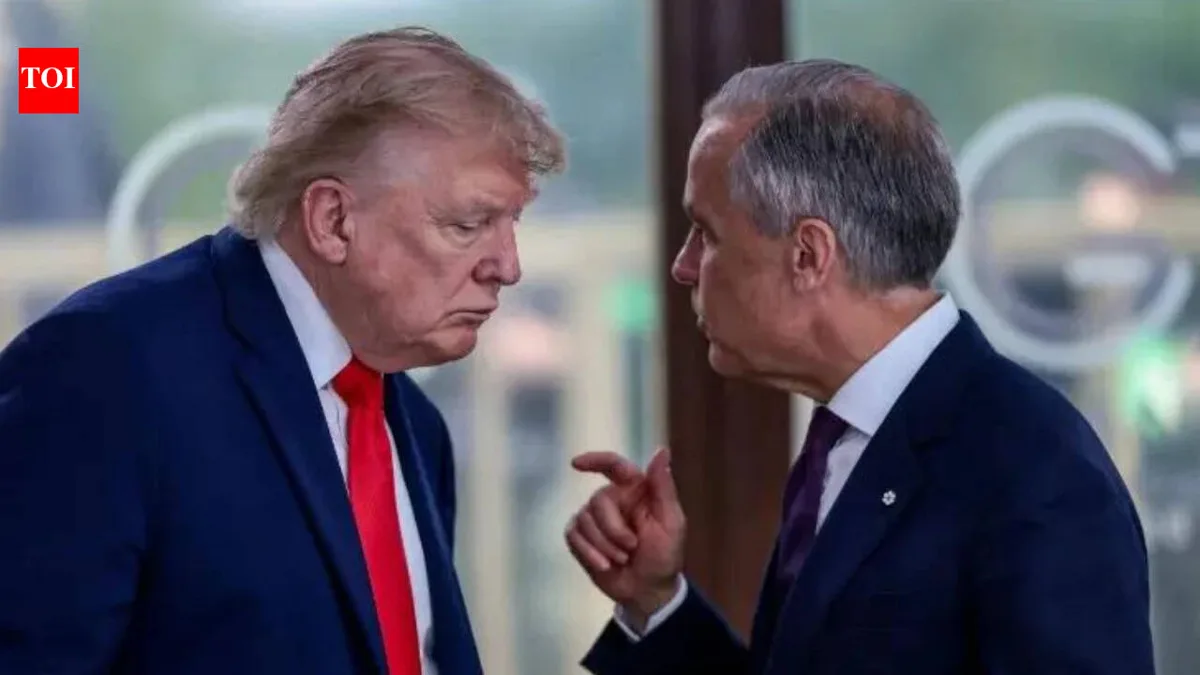
Photo: The Times of India
Neutral summary
The 3 November US midterm elections will decide all 435 House seats, 35 of 100 Senate seats and 36 governorships, with the presidency not on the ballot, according to Premium Times. Premium Times said historically the president's party has usually lost House seats in midterms and that polls as of 16 October gave Democrats a 90 per cent chance of winning the House and 63 per cent of controlling the Senate. It argued the Trump administration's policies on tariffs, aid and travel bans affect Africa and that the next Congress could curb or extend them. The Times of India reported the White House eased some tariffs on Canadian imports two weeks before the election, while introducing others effective 30 October. Senator Susan Collins said she had secured exemptions for Maine agricultural products and that the move aids her re-election bid against a Democratic challenger.
Where accounts differ. Premium Times presents the midterms mainly as a check on Trump's policies in Africa, while The Times of India reports the Canada tariff easing as a benefit to Senator Collins's re-election campaign, with that political framing appearing only in its account.
 The Times of India
 Premium Times
Written by AI from these outlets' articles: facts they report, claims attributed, numbers checked against the sources. It may still contain errors; read the originals.
Article analysis

Band BLocalised faults
The Times of IndiaNeutral
Reports the tariff changes factually but frames them through midterm timing in headline and narration, speculating about electoral benefit to Collins and stating tariff harms without sources.
Six of the six outlets that covered this event headlined it neutrally.
The faults are local; the reporter's narration stays descriptive.
1 Straight reporting10 Campaigning
The same event, one framing
The earliest headline of each kind. Marked words are judgements in the headline itself: stated as fact or in quotation marks.
Neutral 6 of 6
Trump eases tariffs on some Canadian goods while imposing them on others ahead of U.S. midterms
 Toronto Star
How the 3 was worked out
The model answers seven fixed questions from 0 to 3 and cites evidence for each. The score is calculated from the answers in code, so any disagreement points to one question.
-
G1
Reporter's own voiceOne isolated evaluative word in the reporter's voice. Evidence 21
-
G2
HeadlineCompresses or intensifies, but the claim stays attributed. Evidence 11
-
G3
Other side missingEvery party involved responds substantively.0
-
G4
Weight of the unanswered allegationNo allegation against an identifiable party.0
-
G5
Loaded quotesQuotes are informational.0
-
G6
Unattributed claimsOne or two disputable claims are unattributed. Evidence 31
-
G7
Missing contextNecessary background is present.0
Evidence
1ProjectionHeadline voice
weeks before US midterms
Headline frames the tariff move around election timing, implying political motive without stated evidence.
2SpeculationReporter voice
The decision could benefit Republican Senator Susan Collins
Reporter links the policy to an electoral benefit by conjecture rather than sourced reporting.
3Unsubstantiated claimReporter voice
have hurt businesses, contributed to job losses and weighed on economic growth
Causal economic claims stated as fact without a cited source.
4Selection (unscored)Reporter voice· not scored
After renaming Lake Ontario, Google CEO rejects US request to rename Atlantic Ocean
Unrelated also-read link; a corpus-level choice, not scored.
Show the calculation
S = G2 + … + G7 = 1 + 0 + 0 + 0 + 1 + 0 = 2
G1 = 1, below 2: not band D
Not band C or A: band B
Band B: S ≤ 3 gives 3, 4 to 6 gives 4, 7 or more gives 5. Score 3
Every headline, in order
-
Toronto Star
US & Canada
First to report
Neutral
Trump eases tariffs on some Canadian goods while imposing them on others ahead of U.S. midterms
-
The Times of India
South Asia
Analysed above
Neutral
Trump eases tariffs on Canadian imports weeks before US midterms
-
 The Daily Observer
Bangladesh
Neutral
US eases tariffs on Canadian goods ahead of midterm elections
-
Premium Times
Africa
Neutral
-
 CTV News
US & Canada
Neutral
About this method
Method. Bias types follow the Table of Media Bias Elements and the Media Bias Taxonomy (both CC BY 4.0). The impartiality rules follow the BBC Editorial Guidelines and the Ofcom Broadcasting Code. This analysis was made by claude-opus-5-5 on rubric 1.0.0. The score is calculated from the seven answers, never generated.
What this is not. No outlet gets a standing bias rating, and there is no left/right axis, because that axis does not describe Bangladeshi politics. Each analysis covers one article about one event. Members' analytics count how each outlet's headlines were labelled over a chosen period, with the number of headlines behind every share, and also show the average score of an outlet's scored articles: that average describes those articles (mostly each story's lead), not the outlet, and outlets are never ranked by it or by any share.
Known limits. Headlines are grouped into stories automatically, so an unrelated headline sometimes slips in; it is shown faded rather than hidden. Where outlets carry the same wire copy, the comparison has little to show. Human annotators agree on bias in Bangla news only moderately (κ = 0.574 at best), which limits what any automated score can claim.