5 sourcesFirst reported yesterday at 14:31, updated 5 h ago
Dozens killed in attack on Ethiopia Orthodox Christians
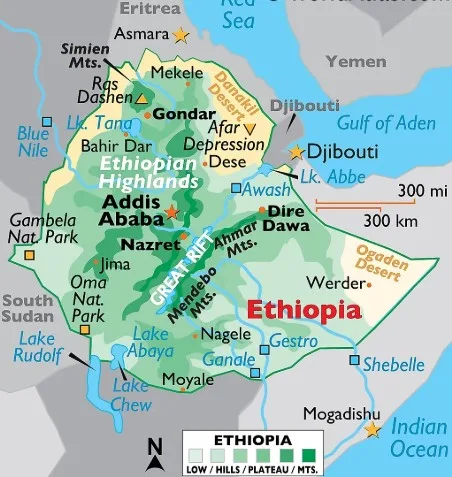
Photo: The Punch
Neutral summary
Armed men attacked Orthodox Christian villages, churches and homes in Shirka district of Ethiopia's Oromia region on Saturday, about 270 kilometres south of Addis Ababa, residents and the conflict monitor ACLED told AFP on Monday. At least 43 people were killed and 18 wounded, according to ACLED and residents, while one resident put the toll at 44, a church deacon at 46 and another resident at 51. ACLED said the attack was believed to be religiously motivated, targeted Orthodox Christians and led to clashes with local militias. A resident said relatives were taken hostage in Chole ward. The state-run Ethiopia Human Rights Commission said it was following the situation. No group has claimed the attack, and it was unclear whether the Oromo Liberation Front was involved. Verifying information is difficult due to media restrictions.
Where accounts differ. Death tolls differ: residents and a deacon cited 44, 46 and 51, while Borkena reported at least 47 according to The Rio Times, which also said local accounts blame extremists and allege official complicity, a claim absent from AFP and The Punch.
 The Punch
 Vanguard
 The Rio Times
Written by AI from these outlets' articles: facts they report, claims attributed, numbers checked against the sources. It may still contain errors; read the originals.
Article analysis
Band BLocalised faults
The PunchNeutral
Reports the attack and death tolls with clear sourcing and verification caveats, adding brief background with one unattributed claim about armed groups exploiting tensions.
Five of the five outlets that covered this event headlined it neutrally.
The faults are local; the reporter's narration stays descriptive.
1 Straight reporting10 Campaigning
The same event, one framing
The earliest headline of each kind. Marked words are judgements in the headline itself: stated as fact or in quotation marks.
Neutral 5 of 5
Over 40 killed in attack on Orthodox Christians in Ethiopia
Vanguard
How the 3 was worked out
The model answers seven fixed questions from 0 to 3 and cites evidence for each. The score is calculated from the answers in code, so any disagreement points to one question.
-
G1
Reporter's own voiceOne isolated evaluative word in the reporter's voice. Evidence 21
-
G2
HeadlineReports the event or the speech act; contested claims are attributed.0
-
G3
Other side missingEvery party involved responds substantively.0
-
G4
Weight of the unanswered allegationNo allegation against an identifiable party.0
-
G5
Loaded quotesSome evaluative words in quotes, in proportion to the event. Evidence 31
-
G6
Unattributed claimsOne or two disputable claims are unattributed. Evidence 11
-
G7
Missing contextNecessary background is present.0
Evidence
1Unsubstantiated claimReporter voice
which have been increasingly exploited by armed groups
Background claim about exploitation of tensions stated without attribution.
2OpinionatedReporter voice
Ethiopia is a deeply fragmented nation
Mildly evaluative characterisation in reporter voice, though broadly descriptive context.
3Word choiceAttributed quote voice
deeply shocked by these tragic killings
Emotive language from a victim-side source, proportionate to the event.
Show the calculation
S = G2 + … + G7 = 0 + 0 + 0 + 1 + 1 + 0 = 2
G1 = 1, below 2: not band D
Not band C or A: band B
Band B: S ≤ 3 gives 3, 4 to 6 gives 4, 7 or more gives 5. Score 3
Every headline, in order
-
Vanguard
Africa
First to report
Neutral
-
The Rio Times
Latin America
Neutral
-
The Punch
Africa
Analysed above
Neutral
-
 CTV News
US & Canada
Neutral
-
 Dawn
South Asia
Neutral
About this method
Method. Bias types follow the Table of Media Bias Elements and the Media Bias Taxonomy (both CC BY 4.0). The impartiality rules follow the BBC Editorial Guidelines and the Ofcom Broadcasting Code. This analysis was made by claude-opus-5-5 on rubric 1.0.0. The score is calculated from the seven answers, never generated.
What this is not. No outlet gets a standing bias rating, and there is no left/right axis, because that axis does not describe Bangladeshi politics. Each analysis covers one article about one event. Members' analytics count how each outlet's headlines were labelled over a chosen period, with the number of headlines behind every share, and also show the average score of an outlet's scored articles: that average describes those articles (mostly each story's lead), not the outlet, and outlets are never ranked by it or by any share.
Known limits. Headlines are grouped into stories automatically, so an unrelated headline sometimes slips in; it is shown faded rather than hidden. Where outlets carry the same wire copy, the comparison has little to show. Human annotators agree on bias in Bangla news only moderately (κ = 0.574 at best), which limits what any automated score can claim.