6 sourcesFirst reported yesterday at 00:00, updated 19 h ago
জাতীয় রাজস্ব বোর্ডের নতুন চেয়ারম্যান আহসান হাবিব, প্রজ্ঞাপন জারি
ahsan habib appointed new chairman of national board of revenue, gazette issued
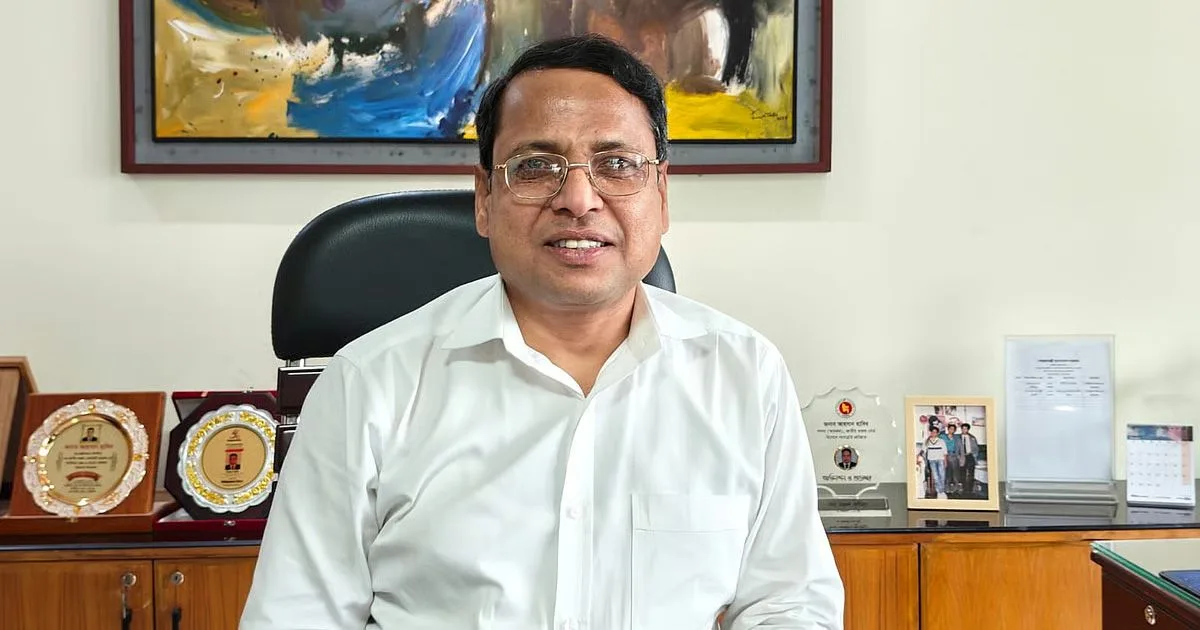
Photo: Dainik Bangla
Neutral summary
Mo. Ahsan Habib has been appointed chairman of the National Board of Revenue (NBR) and full secretary of the Internal Resources Division, according to a gazette notification issued on Monday, 26 October, by the Ministry of Public Administration's higher appointments section under a presidential order. He had previously served in both posts in an acting capacity. The notification, signed by Deputy Secretary Jeti Pru, appoints him on deputation from a 10 per cent presidential quota and says he will return to his own cadre before retirement. The order takes effect immediately, the notification said. Habib joined government service on 15 November 1995 after placing first in the 15th BCS tax cadre, and has held posts including Dhaka tax zones, the Central Intelligence Cell and the Directorate of Inspection of Taxes.
Dainik Bangla Banglavision
Written by AI from these outlets' articles: facts they report, claims attributed, numbers checked against the sources. It may still contain errors; read the originals.
Article analysis
Band BLocalised faults
Factual headline on an appointment; narration is mostly descriptive wire-style roundup, with one unattributed line praising the appointee's competence and a minister's quoted accusation against an unnamed syndicate.
Six of the six outlets that covered this event headlined it neutrally.
The faults are local; the reporter's narration stays descriptive.
1 Straight reporting10 Campaigning
The same event, one framing
The earliest headline of each kind. Marked words are judgements in the headline itself: stated as fact or in quotation marks.
Neutral 6 of 6
জাতীয় রাজস্ব বোর্ডের চেয়ারম্যান হলেন আহসান হাবিব, প্রজ্ঞাপন জারি
 Channel 24
How the 3 was worked out
The model answers seven fixed questions from 0 to 3 and cites evidence for each. The score is calculated from the answers in code, so any disagreement points to one question.
-
G1
Reporter's own voiceOne isolated evaluative word in the reporter's voice. Evidence 11
-
G2
HeadlineReports the event or the speech act; contested claims are attributed.0
-
G3
Other side missingEvery party involved responds substantively.0
-
G4
Weight of the unanswered allegationNo allegation against an identifiable party.0
-
G5
Loaded quotesSome evaluative words in quotes, in proportion to the event. Evidence 21
-
G6
Unattributed claimsOne or two disputable claims are unattributed. Evidence 11
-
G7
Missing contextNecessary background is present.0
Evidence
1Word choiceReporter voice
দীর্ঘ কর্মজীবনে তিনি কর প্রশাসন ও ব্যবস্থাপনা দক্ষতার সাথে পরিচালনা করেছেন।
Evaluative praise of the appointee's competence stated in the paper's own voice without attribution.
2Word choiceAttributed quote voice
একটি অসাধু চক্র সারের কৃত্রিম সংকট দেখানোর অপচেষ্টা করেছে
Minister's charged accusation against an unnamed group, quoted and not adopted by the paper.
3Word choiceReporter voice· not scored
ফলপ্রসূ বৈঠকের
Evaluative adjective on a prior meeting, likely from BSS handout, narrated without attribution.
Show the calculation
S = G2 + … + G7 = 0 + 0 + 0 + 1 + 1 + 0 = 2
G1 = 1, below 2: not band D
Not band C or A: band B
Band B: S ≤ 3 gives 3, 4 to 6 gives 4, 7 or more gives 5. Score 3
Every headline, in order
-
Channel 24
Bangladesh
First to report
Neutral
জাতীয় রাজস্ব বোর্ডের চেয়ারম্যান হলেন আহসান হাবিব, প্রজ্ঞাপন জারি
-
 RTV
Bangladesh
Neutral
জাতীয় রাজস্ব বোর্ডের চেয়ারম্যান হলেন আহসান হাবিব, প্রজ্ঞাপন জারি
-
Dainik Bangla Bangladesh Analysed above Neutral
জাতীয় রাজস্ব বোর্ডের নতুন চেয়ারম্যান আহসান হাবিব, প্রজ্ঞাপন জারি
-
 NTV
Bangladesh
Neutral
-
Banglavision
Bangladesh
Neutral
-
 Dainik Amader Shomoy
Bangladesh
Neutral
About this method
Method. Bias types follow the Table of Media Bias Elements and the Media Bias Taxonomy (both CC BY 4.0). The impartiality rules follow the BBC Editorial Guidelines and the Ofcom Broadcasting Code. This analysis was made by claude-opus-5-5 on rubric 1.0.0. The score is calculated from the seven answers, never generated.
What this is not. No outlet gets a standing bias rating, and there is no left/right axis, because that axis does not describe Bangladeshi politics. Each analysis covers one article about one event. Members' analytics count how each outlet's headlines were labelled over a chosen period, with the number of headlines behind every share, and also show the average score of an outlet's scored articles: that average describes those articles (mostly each story's lead), not the outlet, and outlets are never ranked by it or by any share.
Known limits. Headlines are grouped into stories automatically, so an unrelated headline sometimes slips in; it is shown faded rather than hidden. Where outlets carry the same wire copy, the comparison has little to show. Human annotators agree on bias in Bangla news only moderately (κ = 0.574 at best), which limits what any automated score can claim.