11 sourcesFirst reported Sat 24 Oct at 07:05, updated 11 h ago
রাতেই রাশিয়া যাচ্ছেন ইরানি প্রেসিডেন্ট, বৈঠক হবে পুতিনের সঙ্গে
iranian president travels to russia tonight for talks with putin
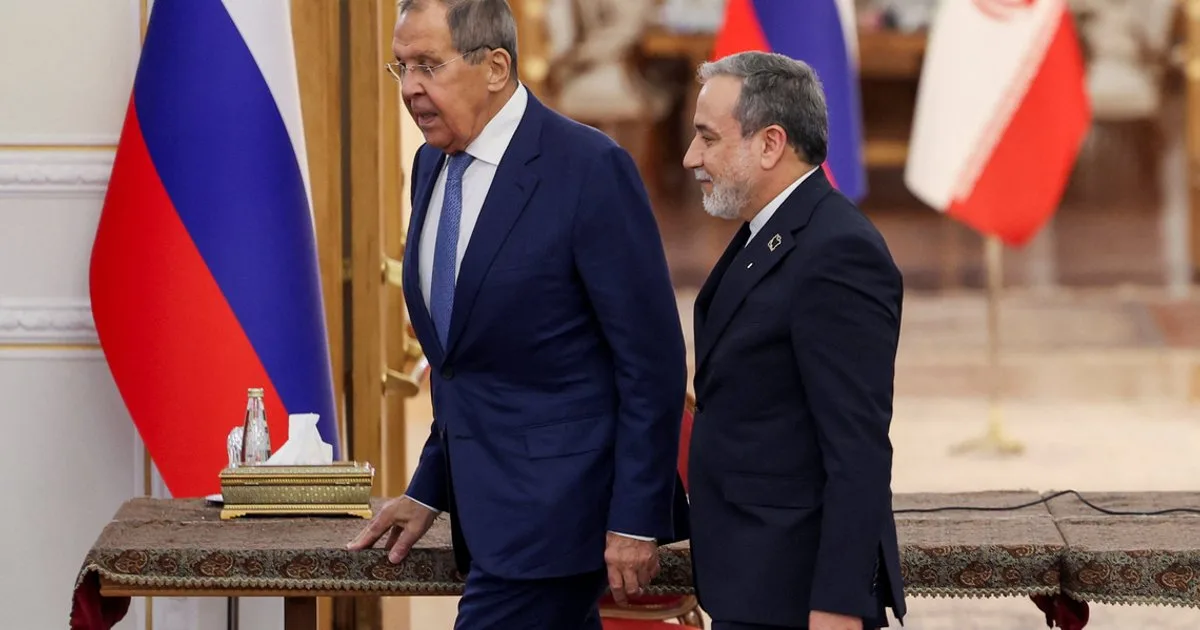
Photo: The Straits Times
Neutral summary
Iranian President Masoud Pezeshkian is set to travel to Moscow on Monday, 26 October, to attend a summit of the Gas Exporting Countries Forum (GECF) on Tuesday, 27 October, and to hold talks with Russian President Vladimir Putin, according to Iranian media Tasnim citing Tehran's ambassador Kazem Jalali. Jalali said the leaders would discuss economic cooperation and geopolitics. Iranian Foreign Minister Abbas Araghchi said the talks follow Russian Foreign Minister Sergei Lavrov's visit to Tehran on 19 October and aim to implement understandings reached then. Kremlin adviser Yuri Ushakov confirmed Putin would also hold separate bilateral meetings with Pezeshkian and Qatar's Emir Sheikh Tamim bin Hamad Al Thani. Discussions are expected to cover bilateral cooperation and regional tensions, including the conflict involving the US and Israel with Iran, and stalled US-Tehran negotiations. Putin earlier said Russia was ready to take part in mediation.
Where accounts differ. Channel i reports that Putin will meet both Pezeshkian and the Qatari emir, while the other outlets mention only Pezeshkian, and Jugantor and ETV describe the trip as taking place tonight, while The Straits Times, The Punch and Channel i give the summit date as Tuesday, 27 October.
 The Straits Times
 The Punch
 Jugantor
 Ekushey Television (ETV)
 Channel i
Written by AI from these outlets' articles: facts they report, claims attributed, numbers checked against the sources. It may still contain errors; read the originals.
Article analysis


Band BLocalised faults
The Straits TimesNeutral
Attributed headline and largely descriptive narration of a diplomatic visit, with one unattributed reporter-voice assignment of who started the war.
Eleven of the eleven outlets that covered this event headlined it neutrally.
The faults are local; the reporter's narration stays descriptive.
1 Straight reporting10 Campaigning
The same event, one framing
The earliest headline of each kind. Marked words are judgements in the headline itself: stated as fact or in quotation marks.
Neutral 11 of 11
Iranian president to meet Putin in Moscow: Iran media
Arab News
How the 3 was worked out
The model answers seven fixed questions from 0 to 3 and cites evidence for each. The score is calculated from the answers in code, so any disagreement points to one question.
-
G1
Reporter's own voiceOne isolated evaluative word in the reporter's voice. Evidence 11
-
G2
HeadlineReports the event or the speech act; contested claims are attributed.0
-
G3
Other side missingEvery party involved responds substantively.0
-
G4
Weight of the unanswered allegationNo allegation against an identifiable party.0
-
G5
Loaded quotesQuotes are informational.0
-
G6
Unattributed claimsOne or two disputable claims are unattributed. Evidence 11
-
G7
Missing contextNecessary background is present.0
Evidence
1Unsubstantiated claimReporter voice
the war started by the US and Israel in February
Assigns responsibility for starting the war in the paper's own voice without attribution.
2ProjectionReporter voice· not scored
signalled
Interpretive verb for the minister's statement rather than a neutral 'said'.
3Word choiceReporter voice· not scored
two of the most sanctioned nations on earth
Characterisation is broadly factual context rather than evaluation.
Show the calculation
S = G2 + … + G7 = 0 + 0 + 0 + 0 + 1 + 0 = 1
G1 = 1, below 2: not band D
Not band C or A: band B
Band B: S ≤ 3 gives 3, 4 to 6 gives 4, 7 or more gives 5. Score 3
Every headline, in order
-
Arab News Middle East First to report Neutral
-
The Straits Times
Asia Pacific
Analysed above
Neutral
-
The Punch
Africa
Neutral
-
 Ahram Online
Middle East
Neutral
Iranian president to meet Putin in Moscow: Iran media - Region - World
-
 Channel 24
Bangladesh
Neutral
রাতেই রাশিয়া যাচ্ছেন ইরানের প্রেসিডেন্ট, বৈঠক করবেন পুতিনের সঙ্গে
-
 Amar Desh
Bangladesh
Probably a different story
Neutral
-
Jugantor
Bangladesh
Neutral
রাতেই রাশিয়া যাচ্ছেন ইরানি প্রেসিডেন্ট, বৈঠক হবে পুতিনের সঙ্গে
-
Channel i
Bangladesh
Neutral
-
 Daily Sabah
Middle East
Probably a different story
Neutral
Iran president, Qatar emir meet on sidelines of Moscow summit | Daily Sabah
About this method
Method. Bias types follow the Table of Media Bias Elements and the Media Bias Taxonomy (both CC BY 4.0). The impartiality rules follow the BBC Editorial Guidelines and the Ofcom Broadcasting Code. This analysis was made by claude-opus-5-5 on rubric 1.0.0. The score is calculated from the seven answers, never generated.
What this is not. No outlet gets a standing bias rating, and there is no left/right axis, because that axis does not describe Bangladeshi politics. Each analysis covers one article about one event. Members' analytics count how each outlet's headlines were labelled over a chosen period, with the number of headlines behind every share, and also show the average score of an outlet's scored articles: that average describes those articles (mostly each story's lead), not the outlet, and outlets are never ranked by it or by any share.
Known limits. Headlines are grouped into stories automatically, so an unrelated headline sometimes slips in; it is shown faded rather than hidden. Where outlets carry the same wire copy, the comparison has little to show. Human annotators agree on bias in Bangla news only moderately (κ = 0.574 at best), which limits what any automated score can claim.